

Table of Contents
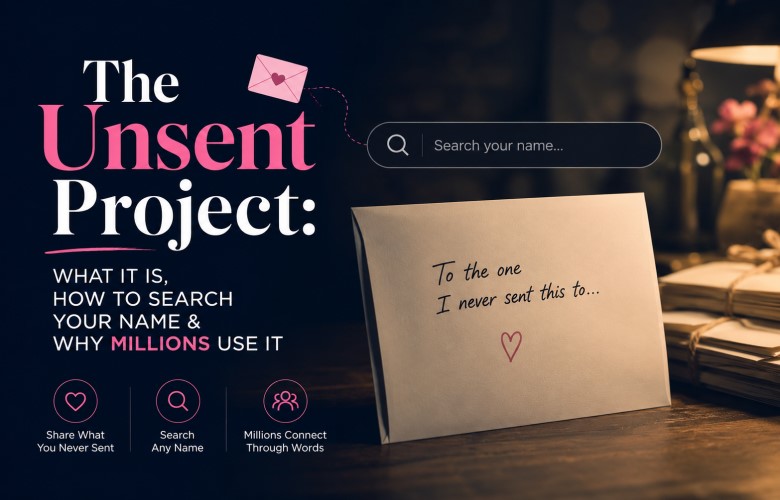
The Unsent Project is a free, anonymous platform where people post text messages they never sent. It holds over 5 million submissions from around the world, each written to a first love, an old friend, a family member, or even a pet.
Artist Rora Blue launched the project in 2015 to answer one question: what color do people see love in? That simple idea turned into one of the most visited emotional archives on the internet.
This guide covers everything you need to know: what the project is, how to search your name, what the colors mean, and why millions of people keep coming back.
What Is The Unsent Project?
The Unsent Project is a digital archive of anonymous text messages. People submit words they always wanted to say but never did. Each message gets tied to a color the sender picks to represent that person.
Not login required. No name. No email. Just your words and a color.
The archive now holds more than 5 million submissions. You can read them, search by name, or filter by color. Every message is public but fully anonymous. You never know who wrote it or who the recipient really is.
The project sits at the intersection of art, emotion, and digital culture. Rora Blue designed it as an art experiment, but it became something much bigger: a global outlet for feelings people could not say out loud.
How to Search Your Name on The Unsent Project
This is the most common reason people visit the site. Here is how to do it:
- Go to theunsentproject.com
- Click the “Archive” tab at the top of the page
- Type your name into the search bar
- Press enter and scroll through the results
You will see all messages submitted with your name. Some will feel personal. Others will not match at all. Remember: the archive uses first names only, so results include messages to anyone with that name, not just you.
If the page loads slowly, wait a few seconds. The archive is large and takes time to pull results.
You can also filter by color instead of name. Click a color swatch on the archive page to see all messages submitted under that emotional shade.
What Do the Colors Mean?
Each message appears on a colored background. The sender picks the color before submitting. Here is what the most common colors tend to represent:
- Red — passion, anger, intense love
- Blue — sadness, longing, calm reflection
- Yellow — nostalgia, warmth, bittersweet feelings
- Pink — affection, softness, early love
- Green — growth, hope, or moving forward
- Purple — mystery, deep emotion, grief
- Black — loss, finality, unresolved pain
- White — peace, closure, relief
These are not rules. Each person assigns their own meaning. That personal interpretation is the whole point. The color system turns a simple text archive into a visual emotional map.
Who Started The Unsent Project and Why?
Rora Blue, a Brooklyn-based artist, started The Unsent Project in 2015. She asked people to submit a text they never sent to their first love, along with the color they associate with that person.
Her goal was to study the link between emotion and color. The data she collected became the foundation of a much larger art project. She has since exhibited work from the archive in galleries and featured it in online installations.
The project has appeared in HuffPost, Teen Vogue, Cosmopolitan, Refinery29, and Good Morning America. That media coverage turned a small art experiment into a platform with millions of users.
Is The Unsent Project Real?
Yes. The Unsent Project is real and actively running. The official website is theunsentproject.com.
Several copycat sites use similar names: theunsentproject.net, theunsentproject.org, theunsentproject.cc, and others. These are not the original platform. Some copy the format. Some add their own submission systems. None carry the archive that Rora Blue built starting in 2015.
If you want to read the original archive or submit a message, use the .com version only.
Why Do People Find It Healing?
Psychologists call it “expressive writing.” You write about something painful or unresolved, and the act of putting it into words helps your brain process it. You do not need to send the message. Writing it is enough.
A study published in the Journal of Health Psychology found that expressive writing reduces stress and helps people work through emotional events. The Unsent Project creates that outlet in a public but anonymous space.
Reading other people’s messages adds another layer. You see that other people feel the same things. Heartbreak, regret, love, loss: these are not unique to you. That shared experience reduces isolation.
For more on how digital tools support emotional wellbeing, read our guide on business tech tools that improve mental focus.
What Can You Submit?
You can submit any message you never sent. The platform defines “first love” loosely. People write to:
- Romantic partners, past and present
- Ex-boyfriends and ex-girlfriends
- Best friends they lost touch with
- Parents and siblings
- Pets that passed away
- People they never had the courage to approach
There are no rules on length or topic. Short messages work just as well as long ones. The platform accepts any emotion: love, regret, anger, gratitude, grief, or relief.
To submit, visit the archive page, click “Submit,” type your message, pick a color, and post. You do not create an account or share any personal details.
What to Do If You Find Your Name
Finding your name in the archive can feel intense. Some messages are tender. Others carry pain. Here is how to approach it:
Stay grounded. You cannot confirm who wrote the message. Thousands of people share your name. A message to “Sarah” or “James” could be for anyone.
Do not read too much into it. The archive is about expression, not identification. The sender wrote to release a feeling, not to contact you.
If it brings up strong emotions, that is normal. Talking to someone you trust helps. If you want professional support, the SAMHSA National Helpline offers free, confidential support at 1-800-662-4357.
You can also submit your own message. If finding your name triggered something, writing back (to the archive, not to a specific person) can help you process it.
Frequently Asked Questions
No. All submissions are fully anonymous. The platform does not collect or display sender information.
Yes. The site runs normally. The archive continues to grow with new submissions.
Over 5 million messages as of 2026.
No. Once submitted, messages become part of the public archive. There is no edit or delete function.
Yes. The site does not require personal information. The content is adult-oriented due to emotional and sometimes explicit language. The site warns users before entry.
Refresh the page, check your internet connection, and try again. The archive is large and can take a few seconds to load search results.
Yes. There is no limit on the number of messages one person can submit.
The Unsent Project vs. Copycat Sites
The rise of the platform led to many imitations. Here is a quick comparison:
Theunsentproject.com The original. Started by Rora Blue in 2015. Holds the real archive.
Theunsentproject.org / .net / .cc Third-party sites that copy the format. Not affiliated with Rora Blue.
Theunsentmessageprojects.com A separate submission platform with its own community.
If you want to read the archive Rora Blue built, go to the .com site. If you want to explore other anonymous message communities, the copycat sites offer their own versions of the experience.
Final Words
The Unsent Project works because it is honest. Actually it does not ask for your name. It does not promise a response. It just gives you a place to say the thing you never said.
Whether you search for your name, read someone else’s message, or submit your own, the project reminds you that everyone carries unspoken words. You are not alone in that.
To explore more tools that help people connect and communicate online, visit our Business Tech section on Busnese.com.
